Court
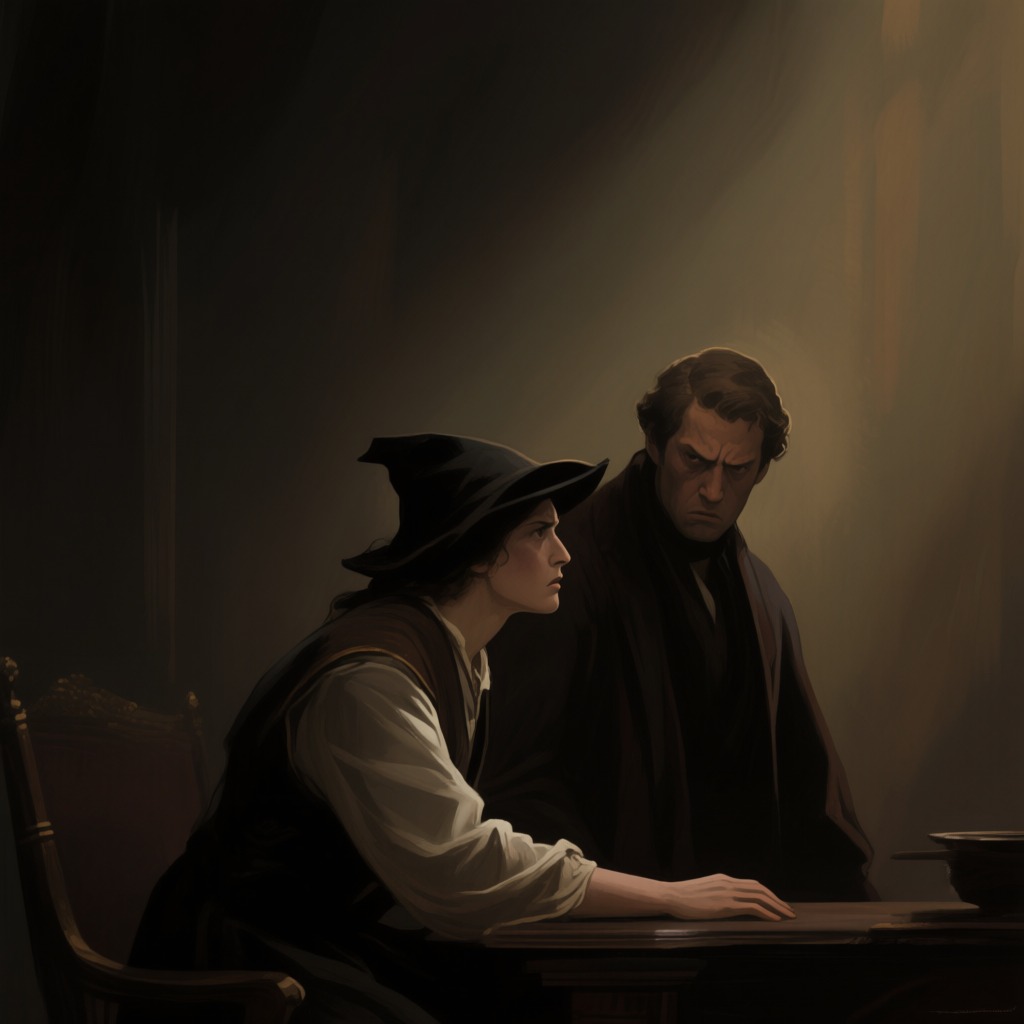
The Court of St. Petersburg is the formal institution of law and justice in the village, a setting where the community's deepest fears, prejudices, and moral conflicts are brought to a public reckoning. Its most significant function in the story is as the venue for the trial of Muff Potter for the murder of Doctor Robinson, an event that draws the entire village and becomes the crucible in which Tom Sawyer's conscience and courage are tested. The Court represents the official, state-sanctioned mechanism for determining guilt and punishment, standing in contrast to the informal, often brutal, justice that the community threatens to mete out through lynching and mob violence.
Structure and Authority
The Court operates with a formal hierarchy: the judge presides, the sheriff proclaims the opening, lawyers present cases, witnesses are called and sworn, and a jury delivers the verdict. The proceedings follow a recognizable legal procedure, with the prosecution building its case through a series of witnesses who testify to circumstantial evidence—Potter washing blood from his hands, the discovery of his knife near the corpse, his guilty behavior when confronted. The defense counsel, however, initially offers no cross-examination, a tactic that baffles and angers the audience, who murmur their dissatisfaction until the bench rebukes them. This structure, while orderly, is shown to be vulnerable to manipulation, as Injun Joe's calm, perjured testimony under oath is accepted as truth, and the community's preconceived guilt of Potter is reinforced by the legal process itself.
The Trial of Muff Potter
The trial is the Court's central event, a spectacle that grips the village. The courtroom is packed with spectators of both sexes, and the atmosphere is one of tense anticipation. Potter, pale, haggard, and in chains, is brought in, a figure of hopelessness. Injun Joe, stolid and unshaken, sits conspicuously. The prosecution's case seems airtight: witness after witness testifies to Potter's possession of the knife, his flight, and his suspicious behavior. The defense's silence only deepens the sense of inevitable doom. The climax arrives when the defense counsel calls Thomas Sawyer as a witness, a move that stuns the room. Tom, terrified but resolute, takes the stand and, after a halting start, delivers a vivid, detailed account of the graveyard murder, culminating in the revelation that Injun Joe, not Potter, drove the knife into Doctor Robinson. The courtroom is transfixed; the pent emotion reaches its peak, and in the chaos that follows, Injun Joe springs through a window and escapes.
Community and Extra-Legal Justice
The Court does not exist in isolation; it is constantly shadowed by the community's own impulses toward rough justice. Before the trial, the villagers express a strong desire to tar-and-feather Injun Joe for body-snatching, but his fearsome reputation prevents anyone from taking the lead. During the trial, the audience's murmurs of dissatisfaction with the defense's passivity nearly provoke a bench reprimand. After Potter's conviction seems certain, talk of lynching circulates—"if he was to get free they'd lynch him," Huck reports. The Court, then, is a fragile bulwark against mob rule, but it is also a space where the community's prejudices (Potter's drunkenness, his low status) are given legal weight. The trial's outcome—Potter's exoneration through Tom's testimony—ultimately vindicates the formal legal process, but only after it has come perilously close to condemning an innocent man.
Significance and Legacy
The Court's role in the narrative is pivotal: it is the mechanism through which the secret of the graveyard murder is finally brought to light, and it is the stage for Tom Sawyer's transformation from a guilt-ridden boy into a public hero. His testimony, given under oath and in the face of Injun Joe's terrifying presence, breaks the blood oath that had bound him and Huck to silence, and it re-establishes the authority of truth and law over the community's fear and superstition. The Court, however, is also a reminder of the limits of formal justice: Injun Joe escapes, and the threat of his revenge continues to haunt Tom and Huck long after the trial concludes. The institution thus embodies both the promise of legal order and the persistent dangers that lie beyond its reach.